Free Shipping for CNC Bit orders over $160

Shop

Shop By Project

Shop By Type

Sets

Sets

Inlay

Inlay

3D Carving

3D Carving

Acrylic

Acrylic

Engraving

Engraving

Bowl And Tray

Bowl And Tray

Digital Files

Digital Files

Sets

Sets

Ball Nose

Ball Nose

Compression

Compression

Downcut

Downcut

Drills

Drills

Engraving

Engraving

Extended Cut

Extended Cut

Roughing

Roughing

Rounding

Rounding

Slotting

Slotting

Straight Cut

Straight Cut

Surfacing

Surfacing

Upcut

Upcut

V Grooving

V Grooving

Jenny Bits

Jenny Bits

Collets

Collets

Accessories

Accessories

CNC Machines

CNC Machines

Vacuum Tables

Vacuum Tables

Spindles

Spindles

Software

Software

Digital Files

Digital Files

Merch

Merch

Closeout

Closeout

CNC Resources

Database Downloads

About

Contact Us

Get A Gift Card

Shop

Shop By Project

Shop By Type

Sets

Sets

Inlay

Inlay

3D Carving

3D Carving

Acrylic

Acrylic

Engraving

Engraving

Bowl And Tray

Bowl And Tray

Digital Files

Digital Files

Sets

Sets

Ball Nose

Ball Nose

Compression

Compression

Downcut

Downcut

Drills

Drills

Engraving

Engraving

Extended Cut

Extended Cut

Roughing

Roughing

Rounding

Rounding

Slotting

Slotting

Straight Cut

Straight Cut

Surfacing

Surfacing

Upcut

Upcut

V Grooving

V Grooving

Jenny Bits

Jenny Bits

Collets

Collets

Accessories

Accessories

CNC Machines

CNC Machines

Vacuum Tables

Vacuum Tables

Spindles

Spindles

Software

Software

Digital Files

Digital Files

Merch

Merch

Closeout

Closeout

CNC Resources

Database Downloads

About

Contact Us

Get A Gift Card

CNC Bit Types Explained: A Beginner's Guide 

The bit is the smallest part of your setup but has one of the biggest impacts on how a project turns out. A great machine running a dull or incorrect bit leads to bad cuts, so it is worth understanding what you are using in your machine before starting any work.


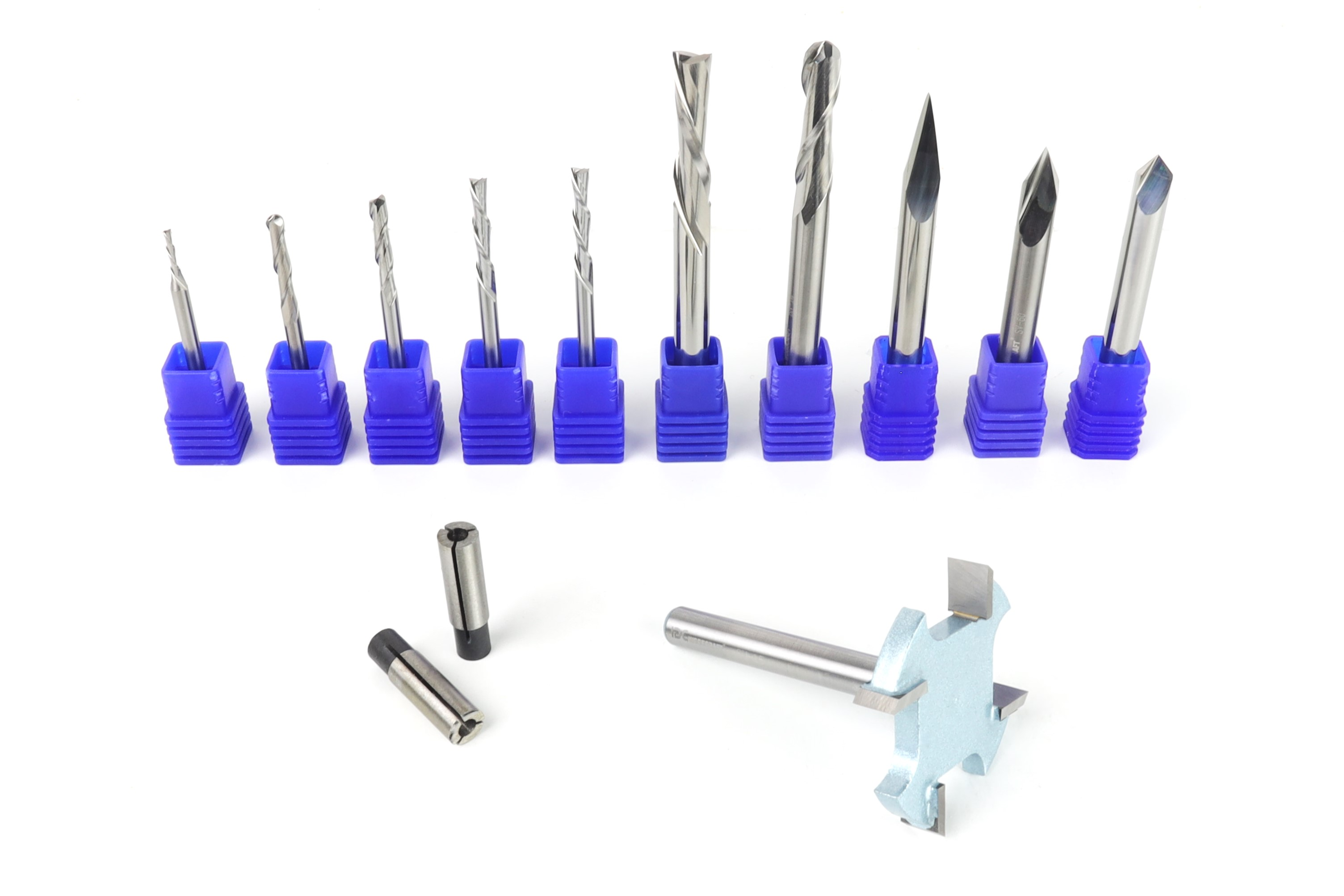
CNC bits come in dozens of shapes and sizes, but they sort into a few clear categories. This guide covers what makes a CNC bit different from a drill bit or a handheld router bit, what bits are made of, the main types by shape, the specialty bits built for specific projects, and how to pick the right one for the job.

What are CNC Router Bits and How They Cut

A CNC router bit is held in a spinning collet and moved through the material along a path your software sets. It can travel sideways, plunge straight down, or do both in a single pass, which is what separates it from a drill bit that only bores a hole. That range of movement is the reason there are so many CNC bit types. The shape of the bit determines the shape of the cut. A flat-bottomed pocket, a sharp V-groove, a rounded valley, and a smooth flat surface each come from a different bit, and picking the right one depends on the job


The Anatomy of a CNC Bit

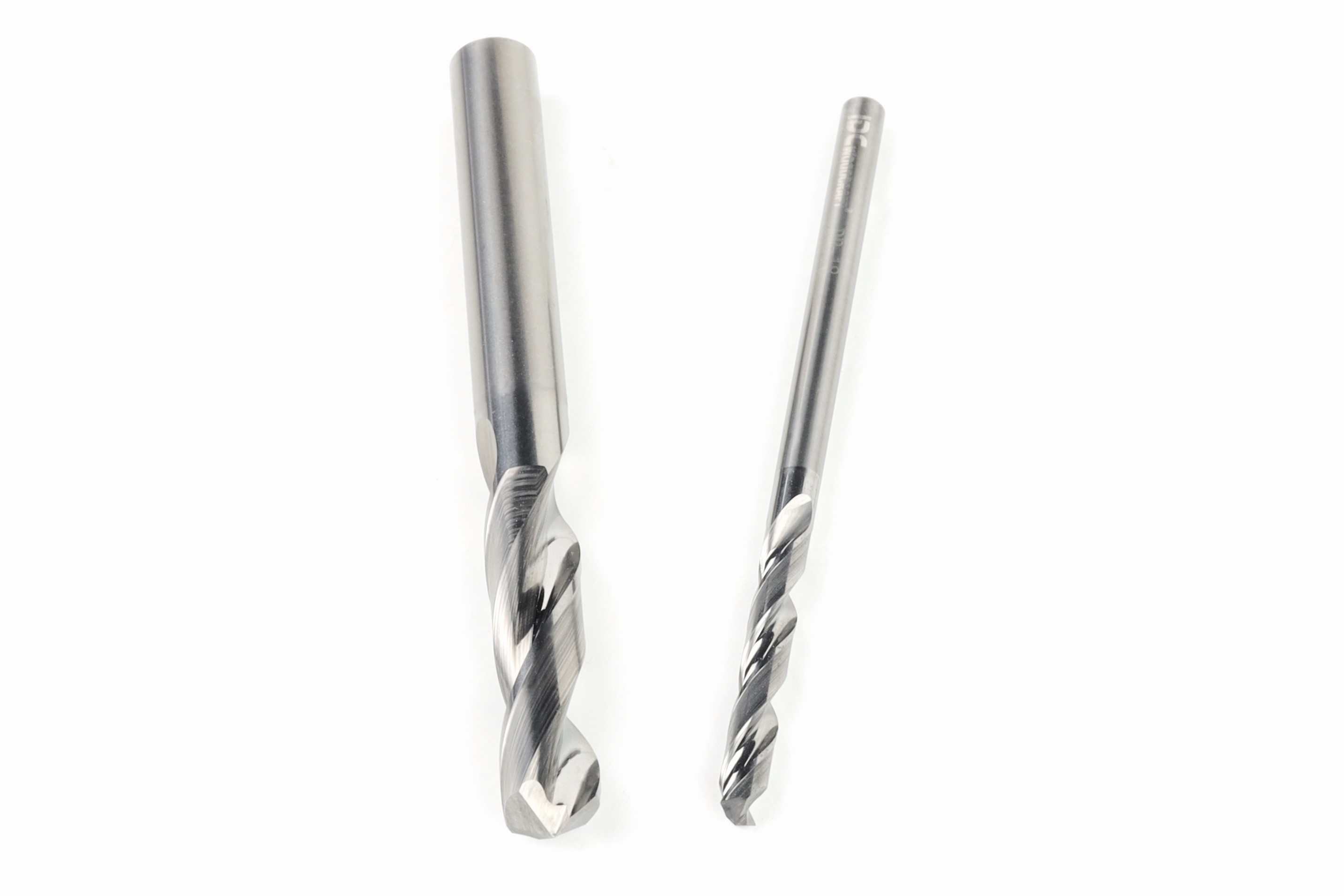
A CNC bit has three parts. The shank is the smooth end that clamps into the collet, the flutes are the grooves that spiral or run up the body, and the cutting edge is the sharp edge that removes material. The cutting edge is the part of the bit that actually does the cutting, so its condition shows up directly in your finished cut. Most CNC work is done with end-mill-style router bits that cut as they move, but some CNC drill bits exist for plunging clean holes and other niche tasks.

What CNC Bits Are Made Of
 

Most bits can be categorized into three materials. High-speed steel, diamond-coated tooling, and solid carbide. The main differences come down to how hard the material is and how long it holds a sharp edge.


High-Speed Steel
 

High-speed steel, or HSS, is the cheapest of the three materials. It dulls quickly, and MDF and plywood wear it down especially fast. A full bit burns the wood, leaving fuzzy edges and puts more strain on your machine. HSS is common in handheld router bits and drill bits, but you will rarely see it on bits made for CNC work. 


Diamond Coated
 

Diamond-coated and polycrystalline diamond, or PCD, tool bits are primarily for specialties. They are built for the most abrasive and hard materials, like carbon fiber and dense composites. They are far more expensive, and the average hobbyist woodworker will practically never need to use them. 


Solid Carbide
 

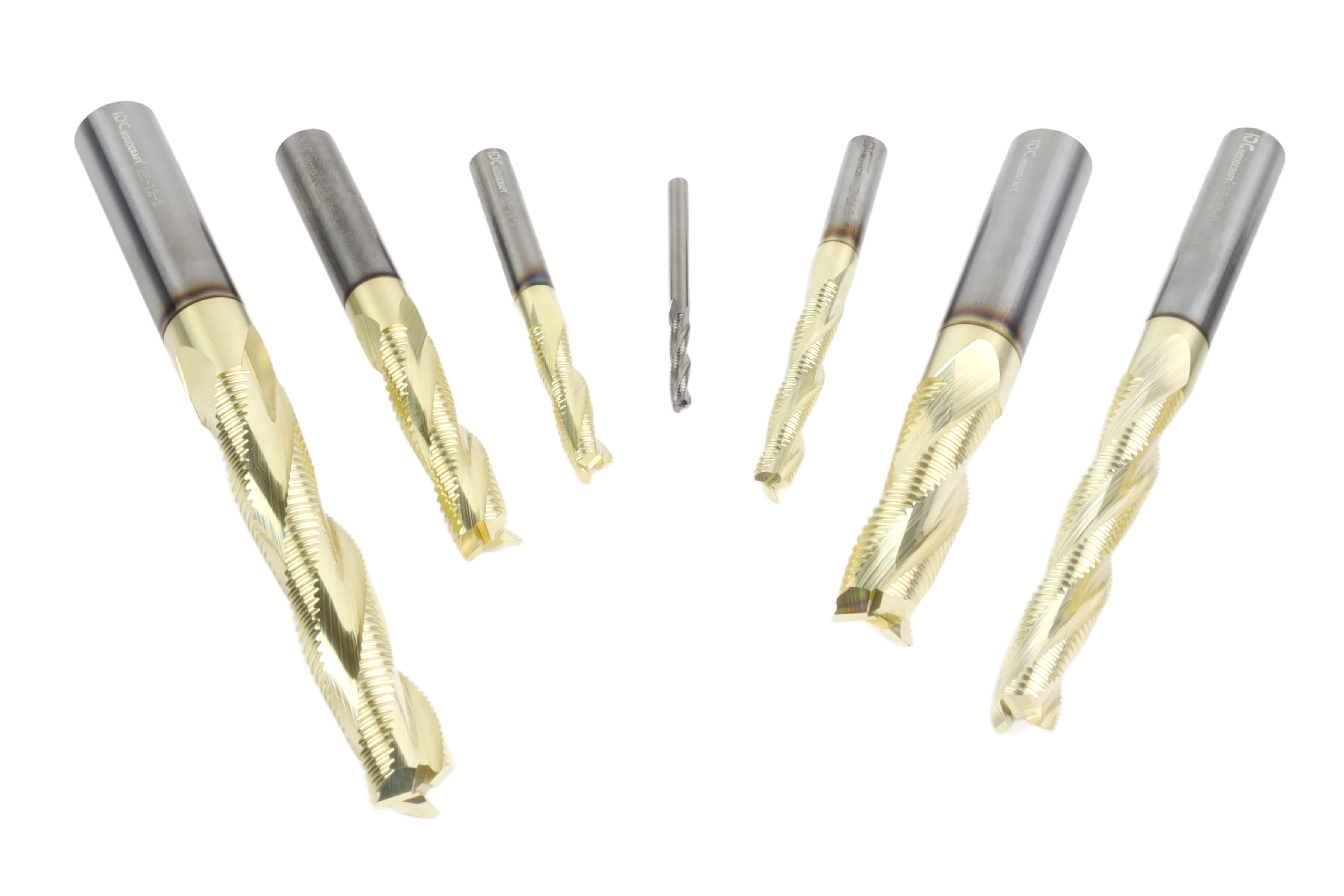
Solid carbide is the sweet spot for CNC woodworking. It is harder than steel, holds its edge far longer, runs at higher speeds, and cuts wood, plastics, and soft metals like aluminum without dulling on the first project. That hardness is why it stays sharp so long and why it is what most quality bits are made from. At IDC Woodcraft, we offer only solid carbide bits or carbide tipped bits, where applicable, made locally in the USA.

The Main CNC Bit Types By Shape
 

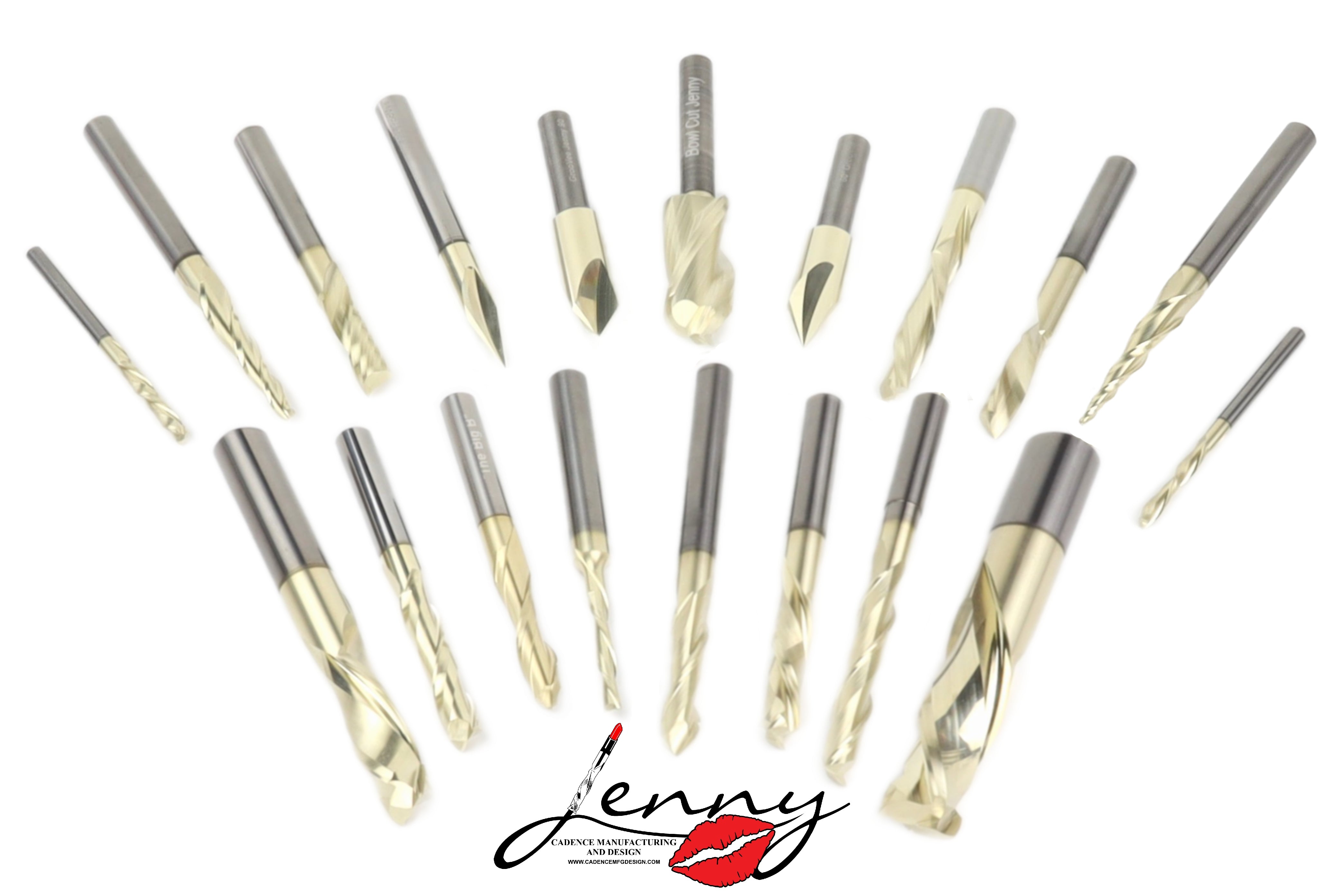
Most bits can be sorted into shapes, each suited for a different kind of cut. 

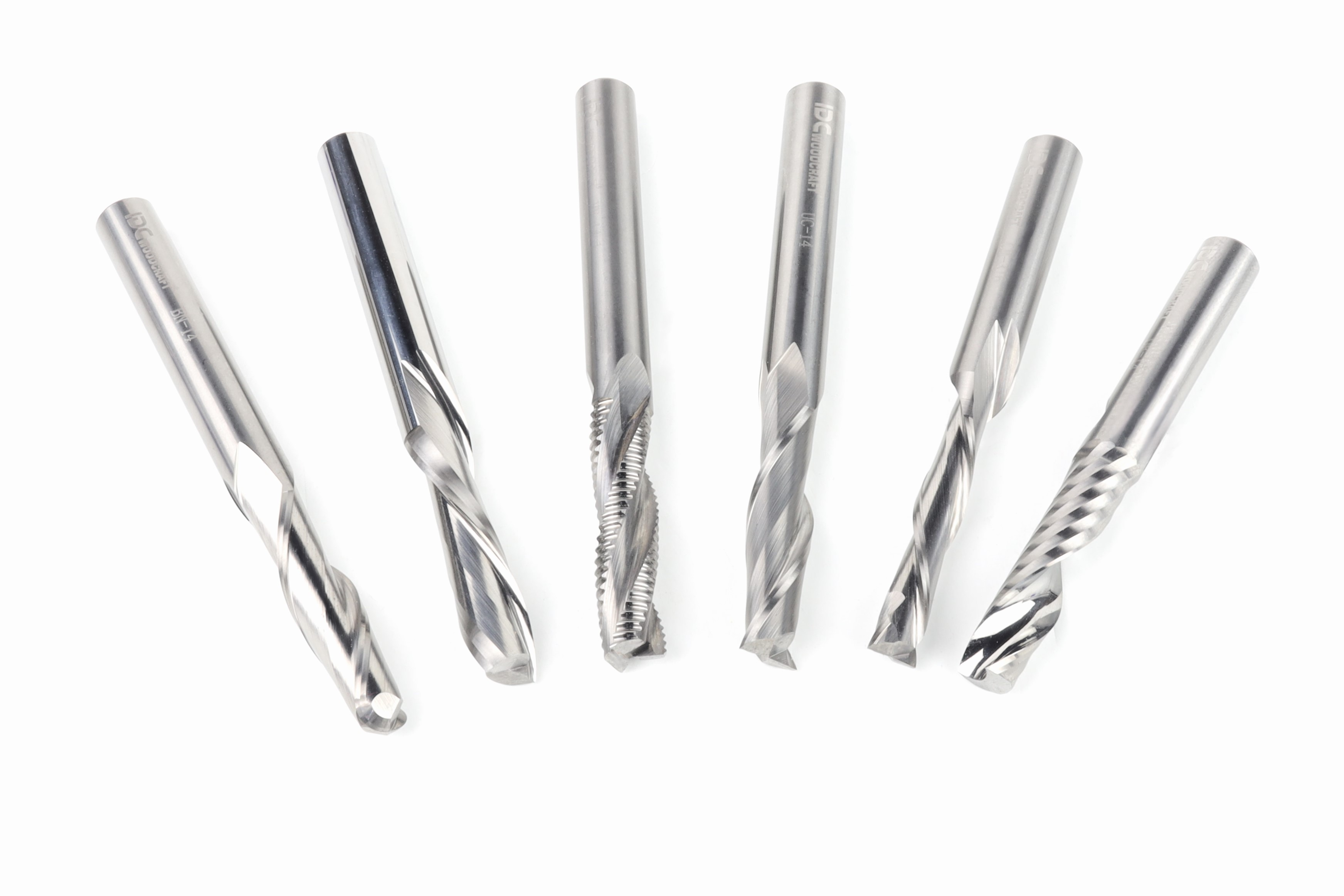
Straight Bits
 

Straight cut bits make flat-bottomed straight cuts, and they handle slotting and simple profiling. They are a good starting point and easy to understand since the cutting edge runs straight up the bit. A straight router bit is often the first one beginners reach for.


Spiral Bits

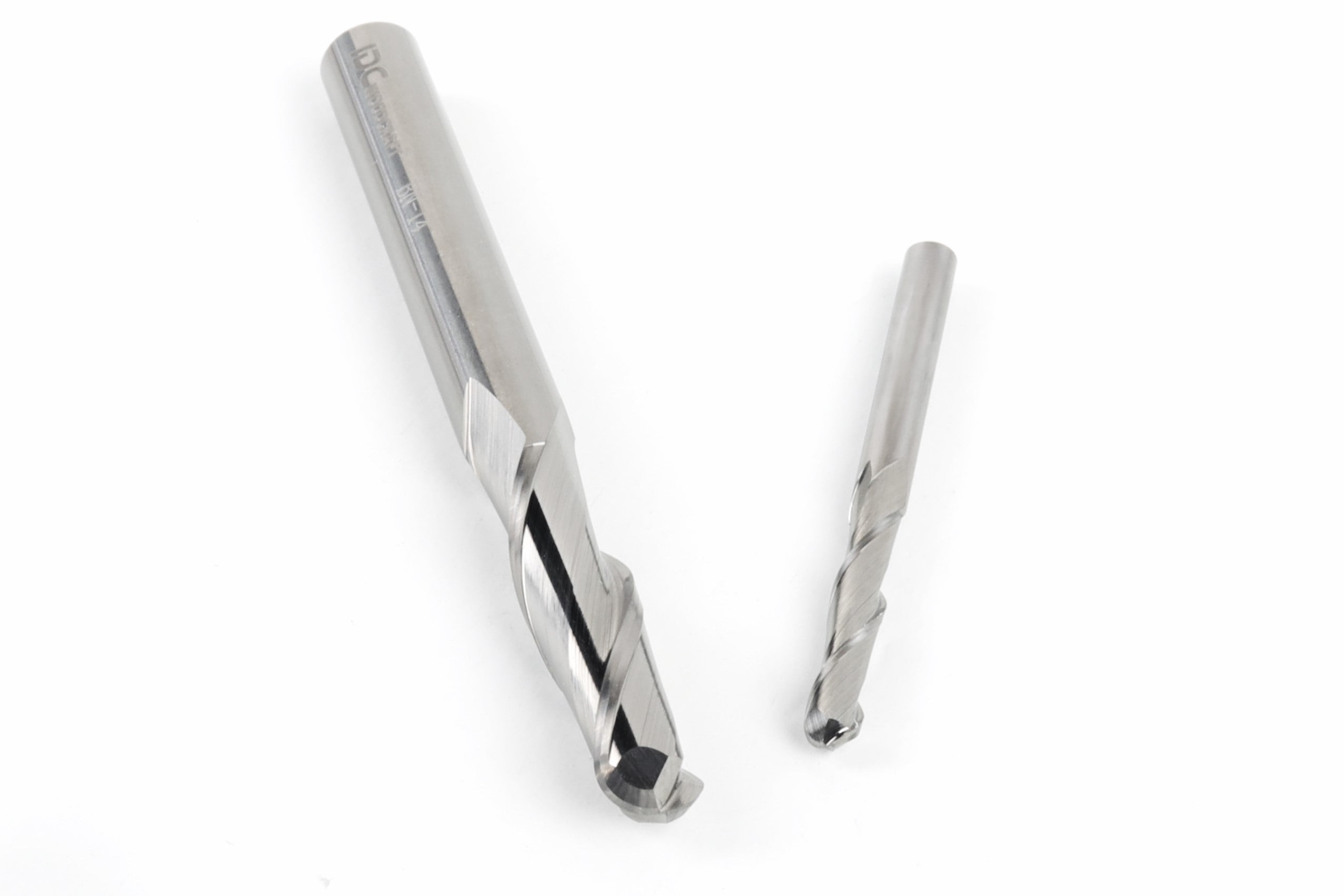
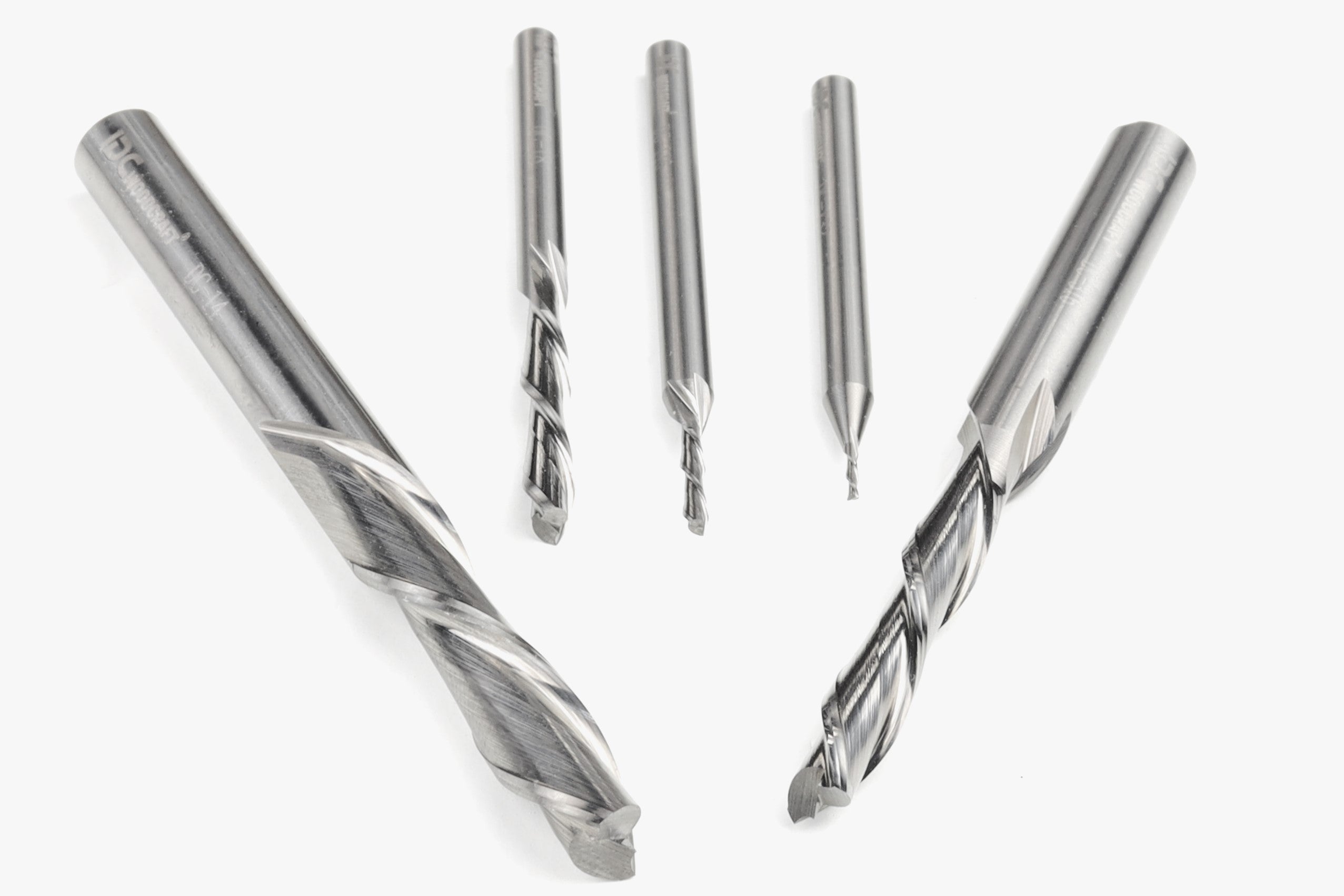
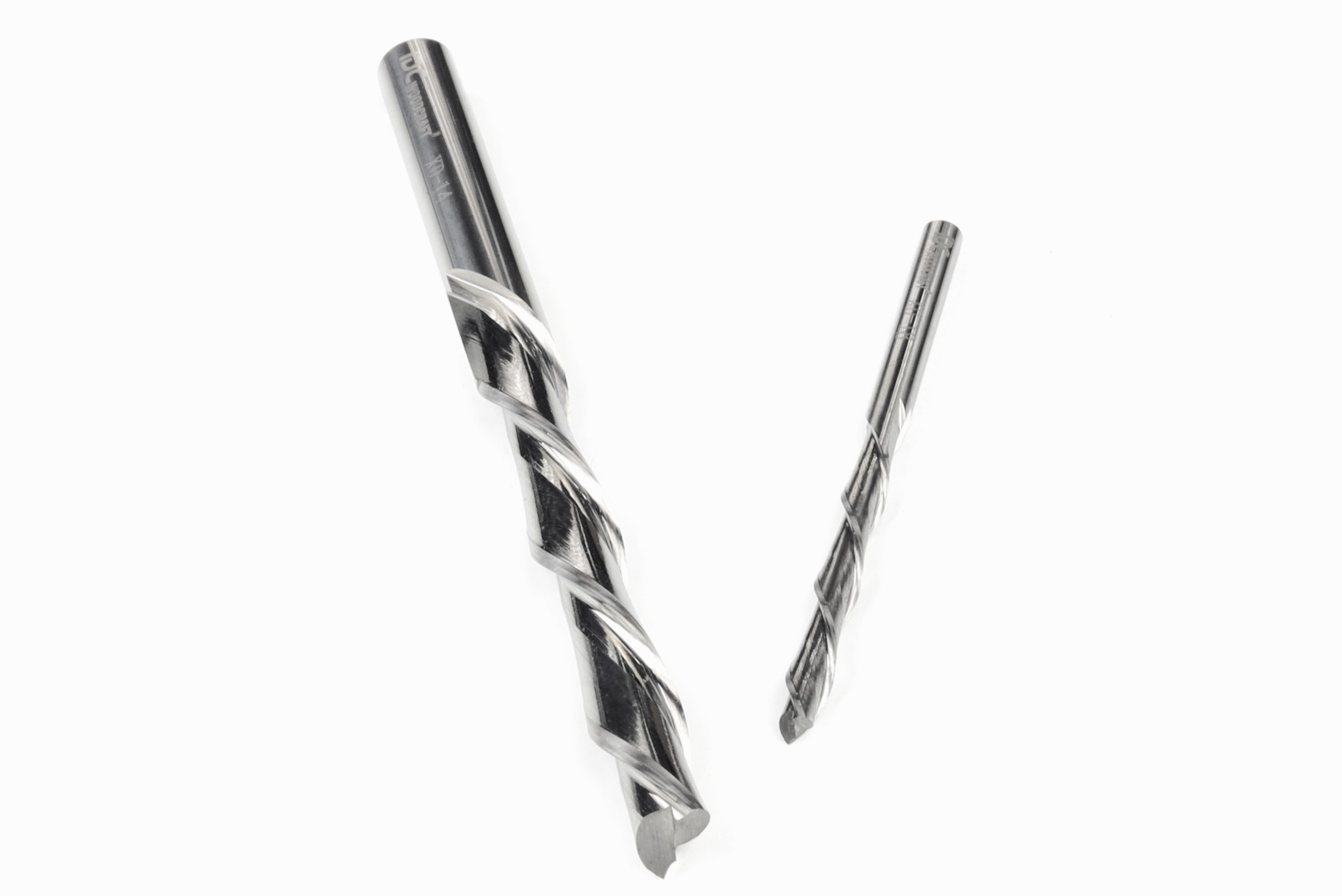
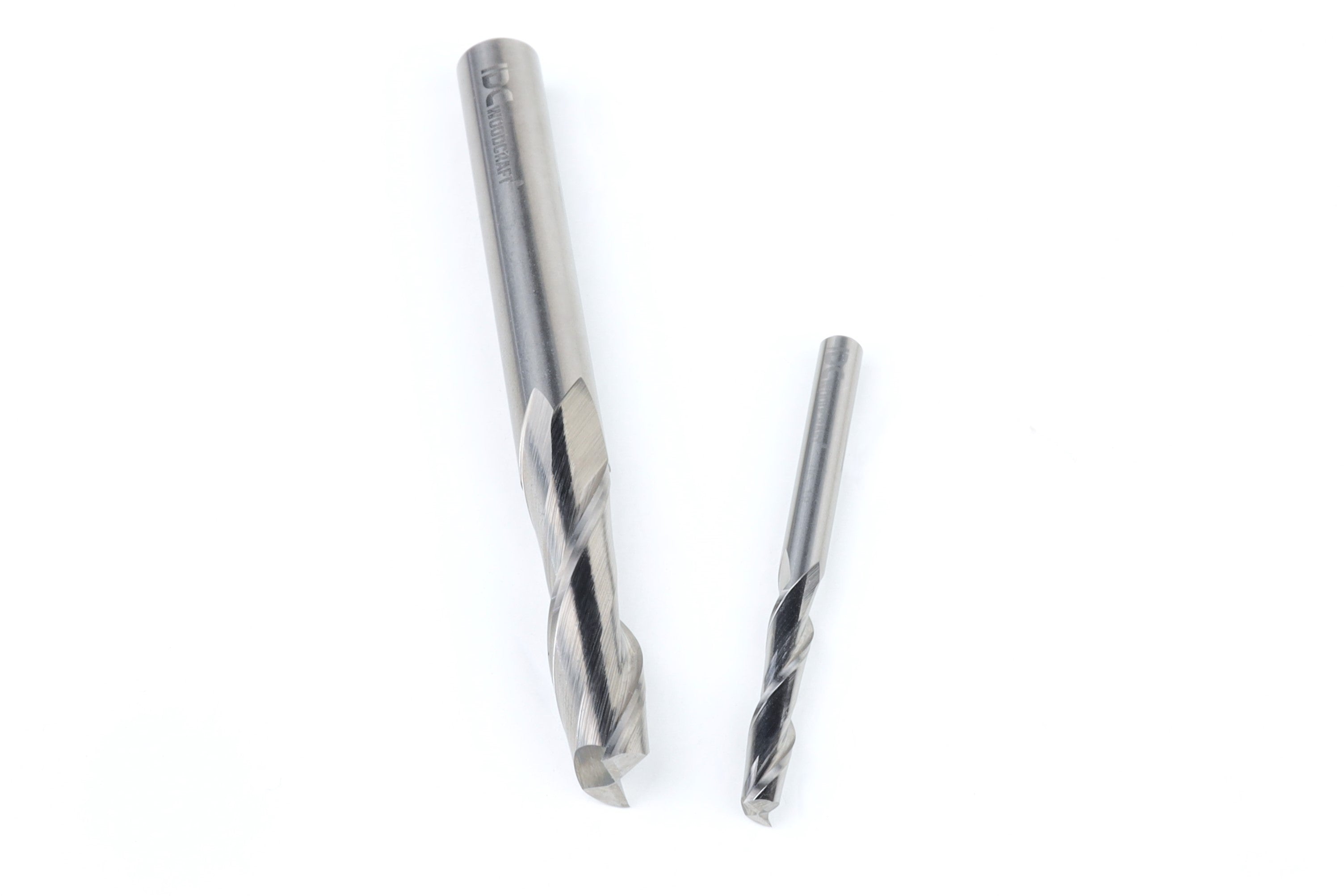
Spiral bits are the CNC workhorse. Their cutting edges twist around the body in a spiral, and that shape lifts chips up and out of the cut as the bit spins. Clearing the chips this way, called chip clearance, keeps the bit from clogging or overheating, so it cuts cleaner and faster than a straight-fluted bit. 

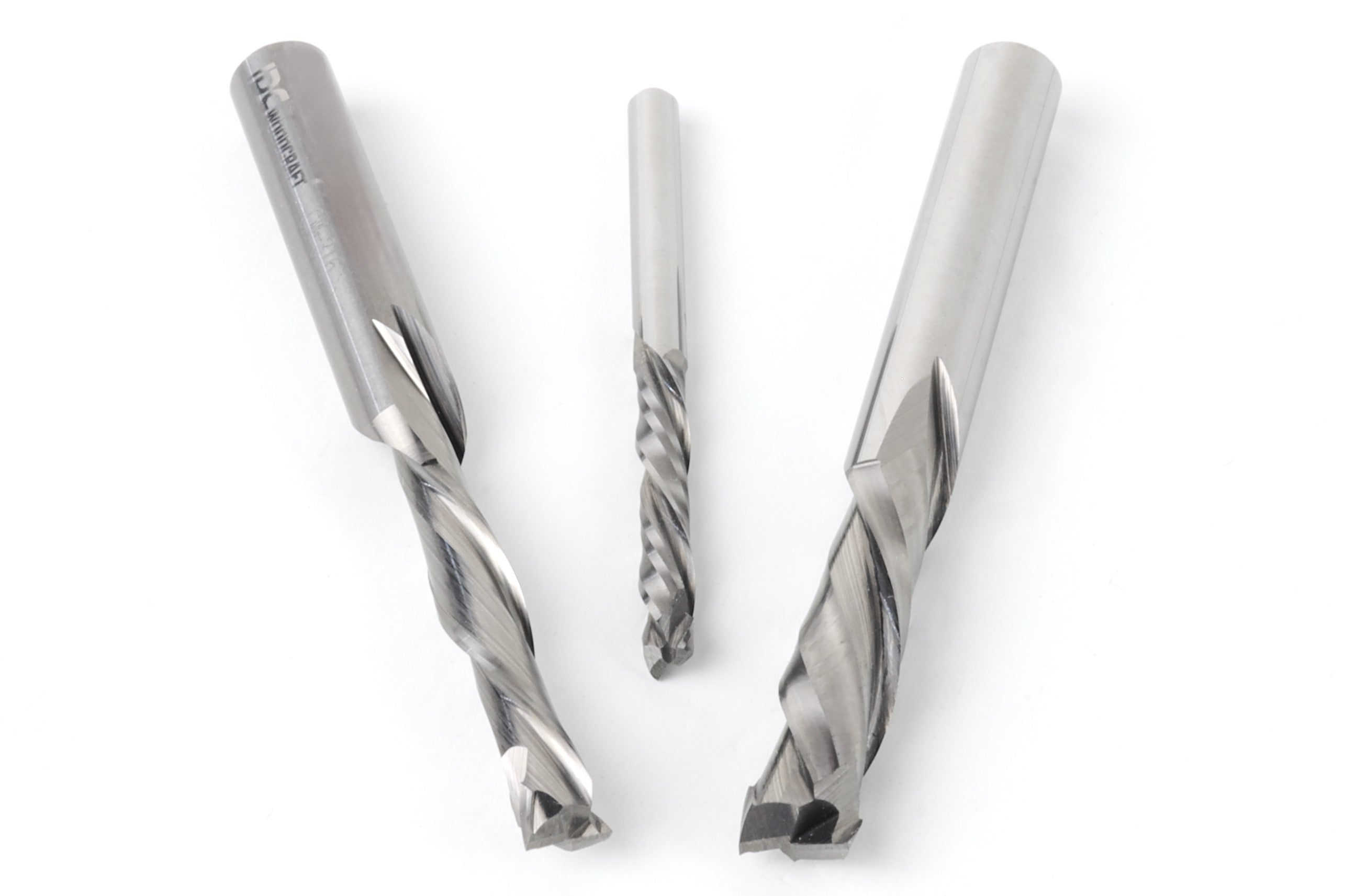
Spiral bits come in three types: upcut, downcut, and compression

  • An upcut bit pulls the chips up and out of the hole, which clears the cut well but can leave a fuzzy top edge on your material. 
  • A downcut bit pushes the chips down, which keeps that top edge clean and crisp. 
  • A compression bit cuts upward at the bottom and downward at the top, so it leaves a smooth surface on both faces at once. 

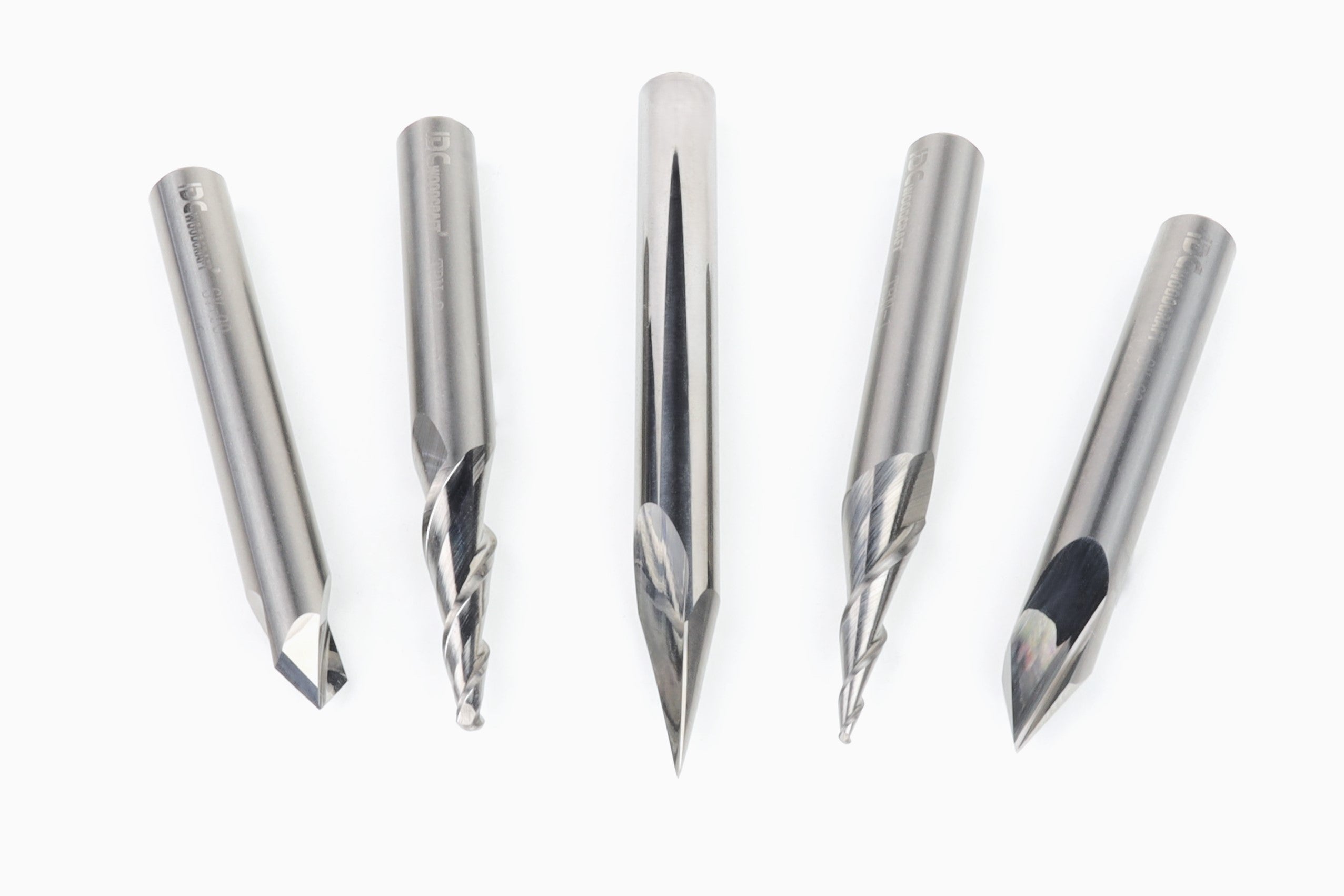
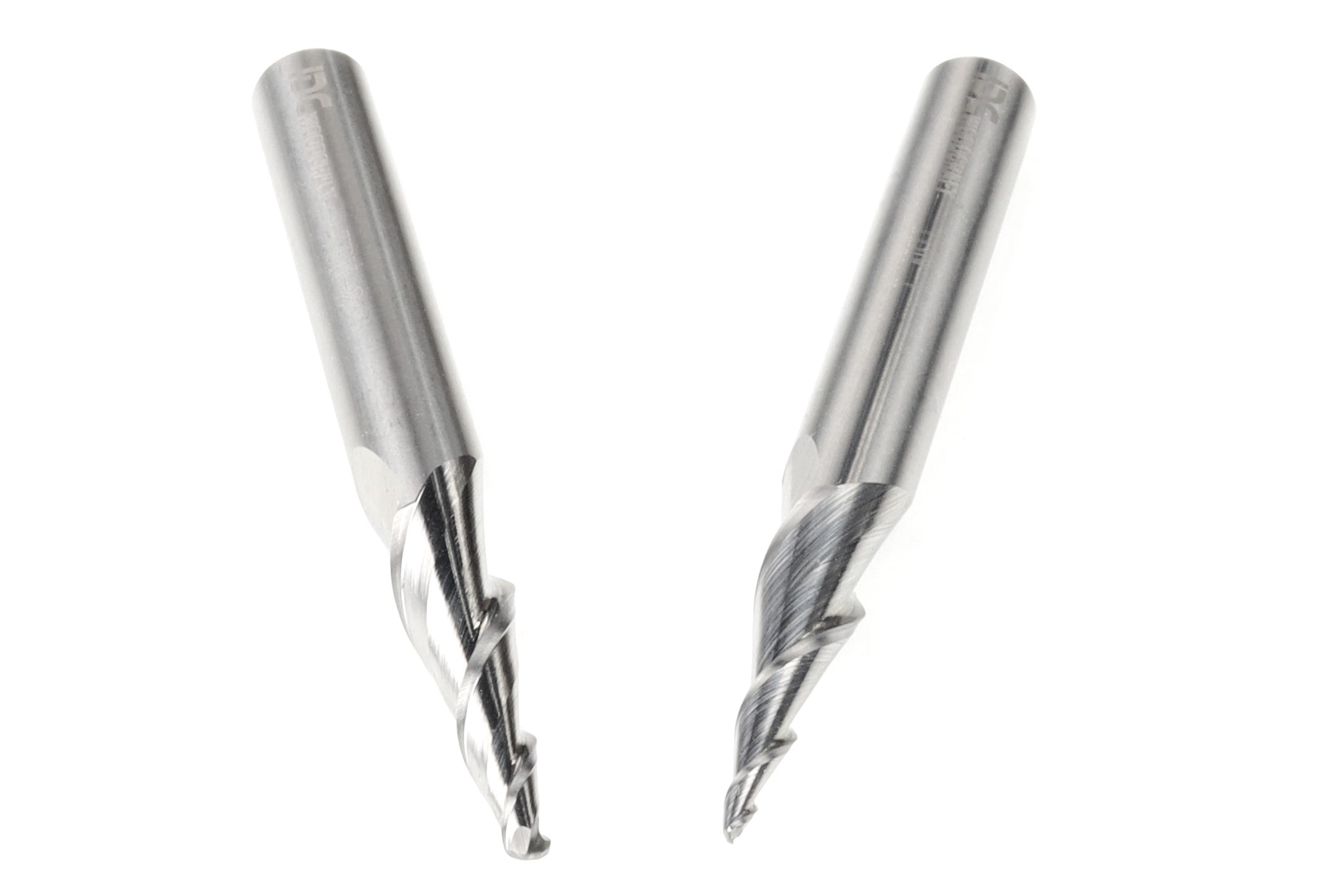
Ball Nose Bits
 

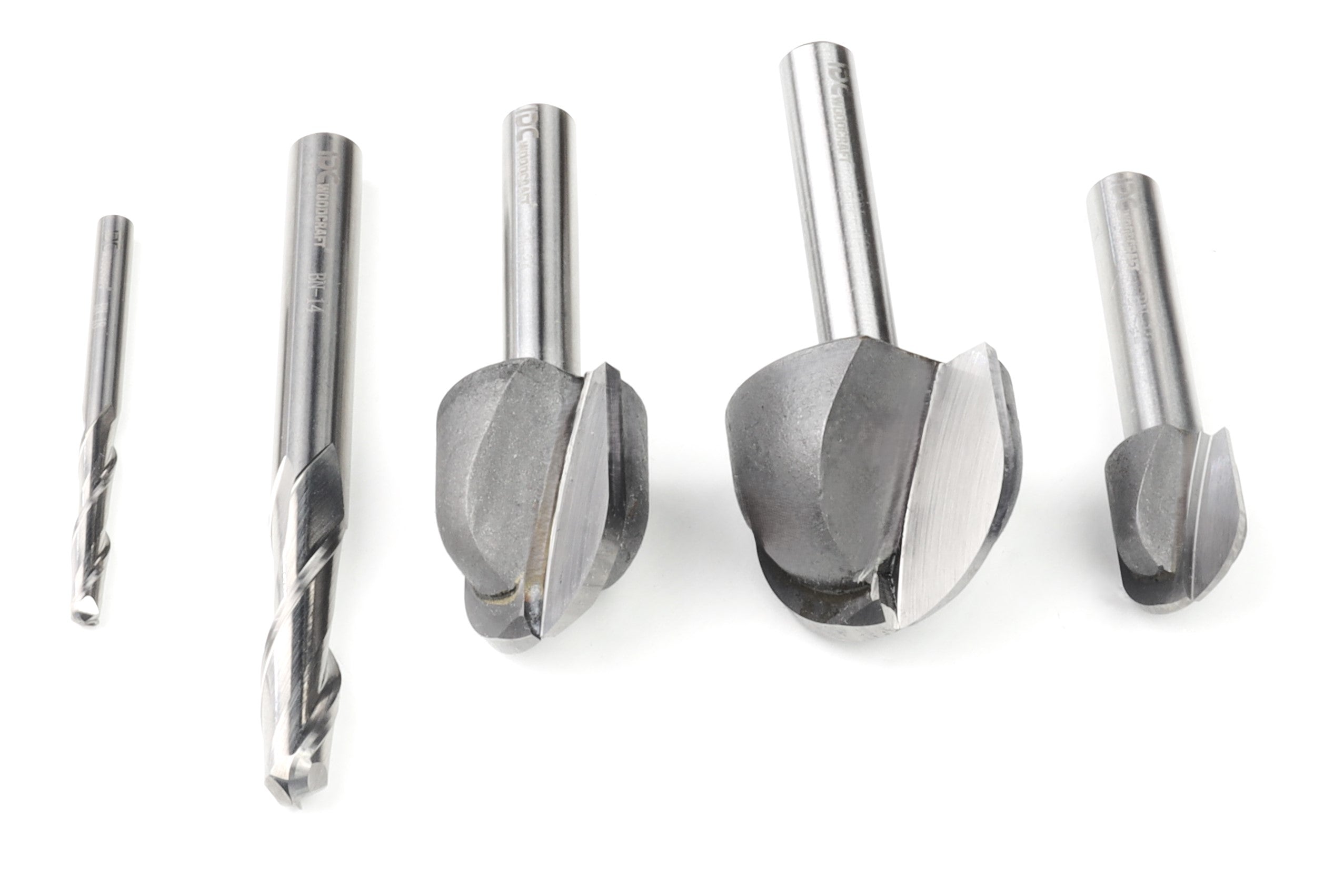
Ball nose bits have a rounded tip instead of a flat one. That round profile is what carves the smooth curves in 3D work, relief carving, and intricate designs. When a project has complex shapes rather than flat pockets, a ball nose bit is usually the right pick. 

V-Groove Bits
 

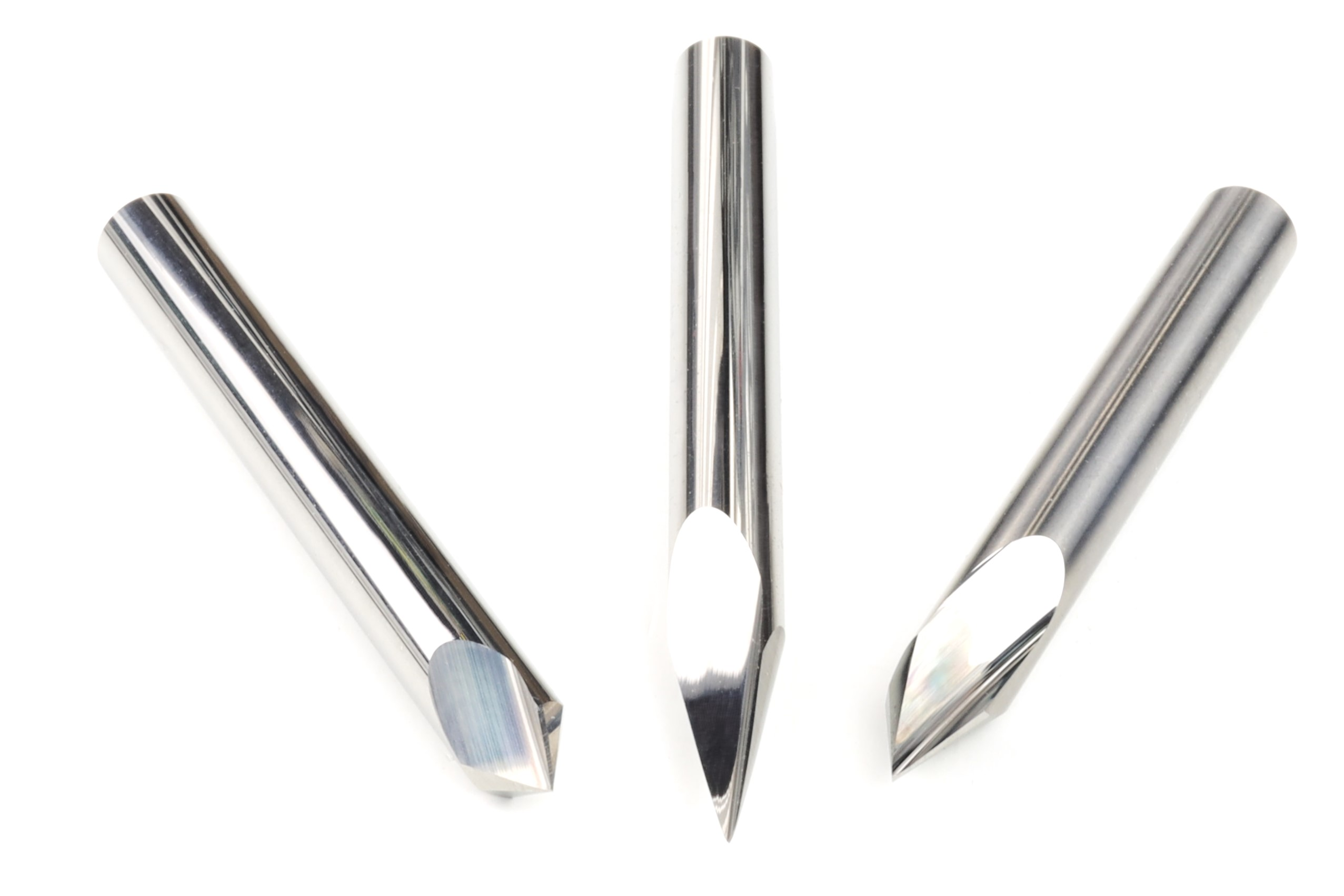
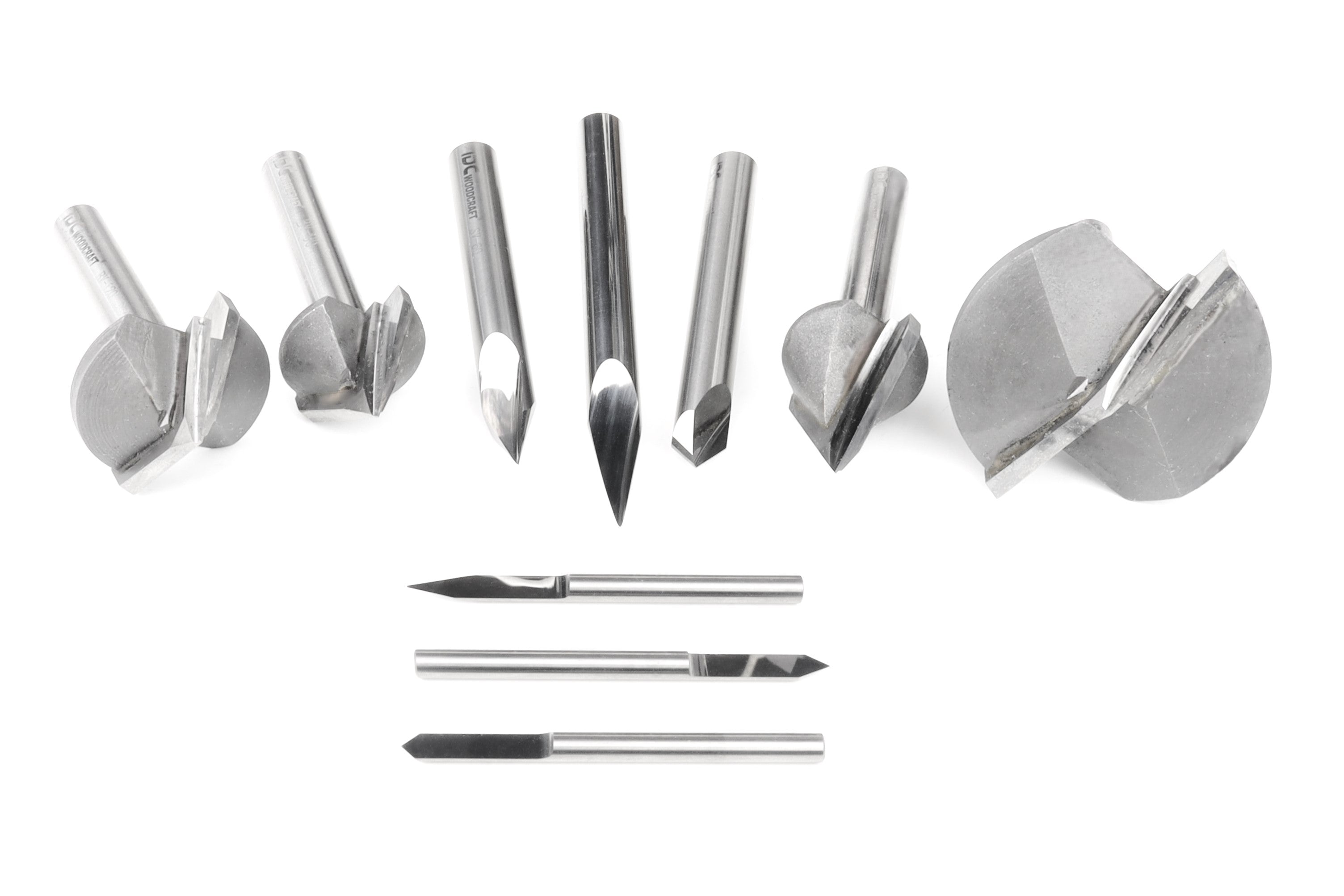
V-groove bits come to a point at a set angle and cut a V-shaped groove instead of a flat-bottomed one. That angled point is what makes them the go-to for lettering, sign-making, and decorative engraving. 

Because the groove is V-shaped, the deeper the bit goes, the wider the cut, which is how a single bit carves both fine hairline detail and bold, wide strokes in the same design. They come in different angles, like 60 and 90 degrees, and the angle you choose changes how sharp or broad those lines turn out.

Roughing Bits
 

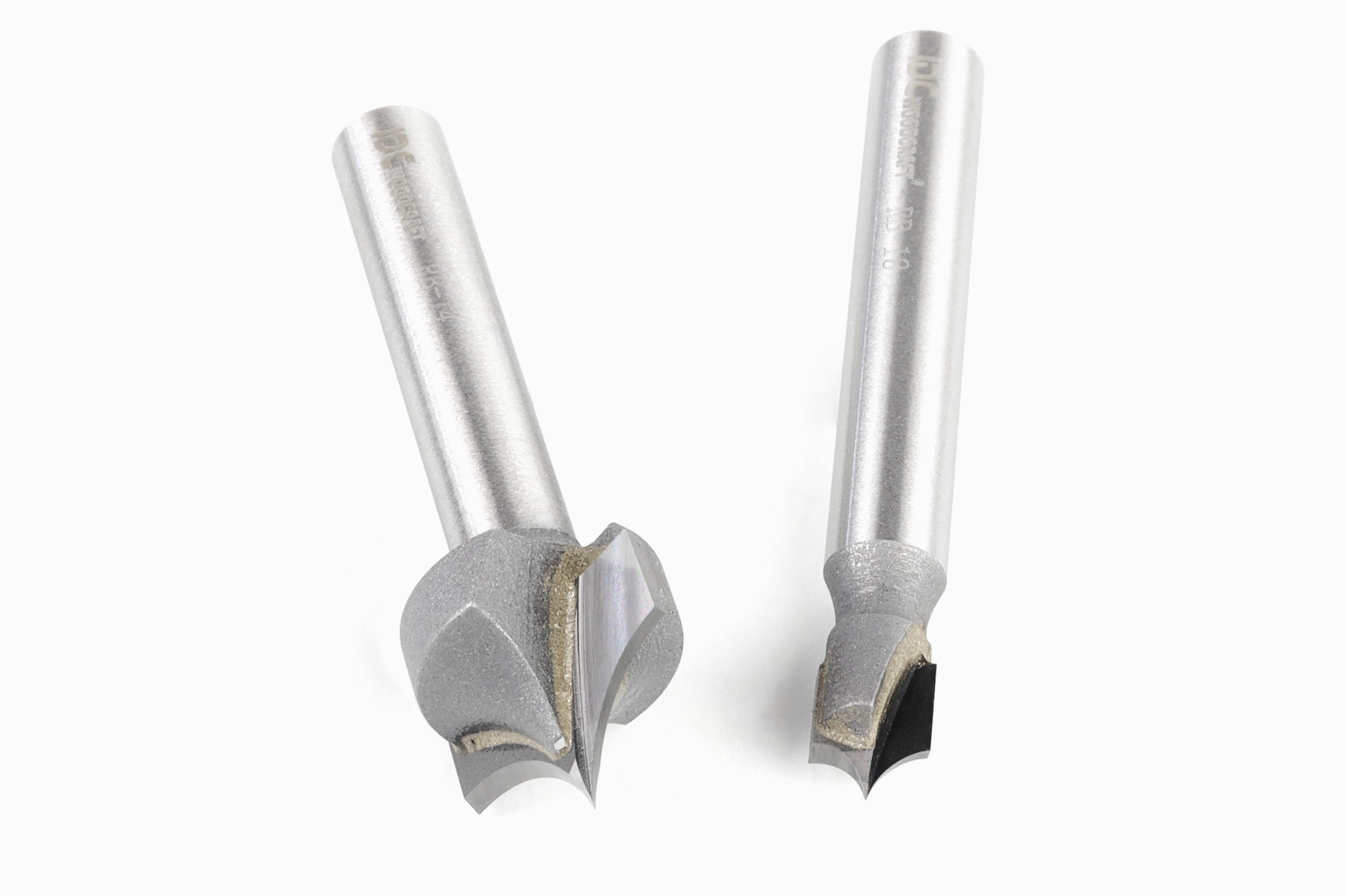
Roughing bits are built to clear a lot of material fast. Small serrations along the cutting edge break the chips into smaller pieces, which lets the bit remove wood quickly without bogging down or overheating. That speed comes with a trade: the serrations leave a ridged surface rather than a smooth one, so a roughing bit does the heavy removal and a finishing bit follows to clean it up. On large pockets and deep 3D work, roughing first can save significant cutting time.


Bits for Specific Projects

Some bits are grouped less by their shape and more by the specialty. These are the ones you buy when your job has a particular need. 


Inlay bits are made for tight, clean fits, so a contrasting piece of wood drops into the pocket and sits flush with no gaps. A good inlay comes down to that fit, and the right bit is what closes the seam. Our guide to making a perfect inlay walks you through the whole process from start to finish. 


3D carving bits carve the smooth curves and depth changes that turn a flat board into a relief or a sculpted surface. This is where a design stops looking like hard cuts and starts looking shaped. Our 3D carving guide covers how to set one up when your project calls for it.


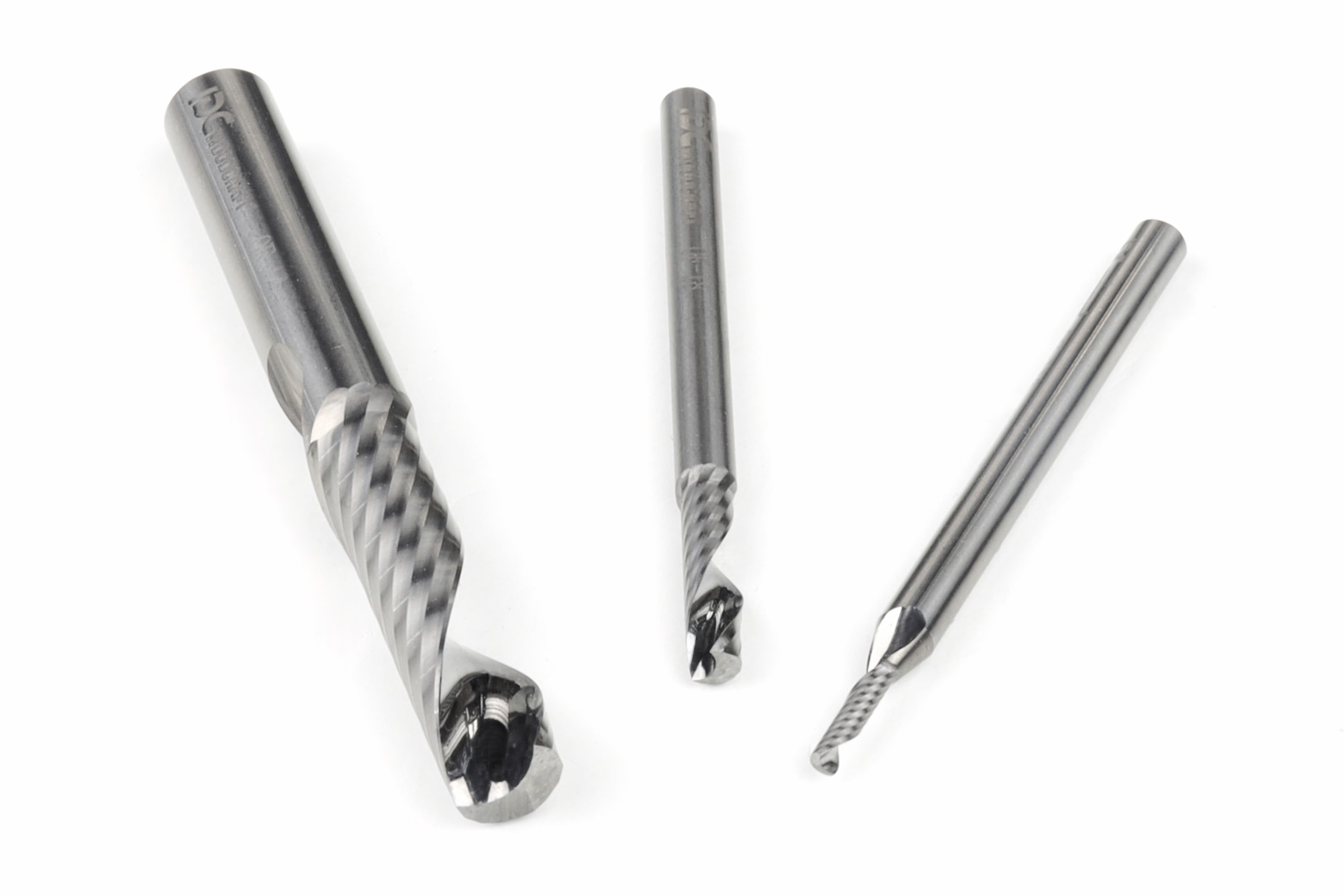
Acrylic bits, also called O-flutes, are built for plastics, which behave differently from wood under a spinning bit. The wrong bit melts acrylic and leaves a gummy edge, but a dedicated acrylic bit clears chips cleanly and leaves a smooth, polished cut. If you plan to make signs or edge-lit pieces, this is the bit that keeps the plastic from fighting you.


Engraving bits cut fine, shallow detail and small text where a larger bit would be clumsy and unhelpful. They are the ones to reach for on intricate designs, logos, and delicate line work where precision matters most.

How to Choose the Right CNC Bit

Match the Bit to the Cut
 

Match the bit to the cut first. Roughing and finishing are different steps that call for different bits. Flat pockets and straight cuts want a straight or spiral bit, curves and complex shapes want a ball nose, and signs and lettering want a V-groove bit.

 

Check the Shank Size
 

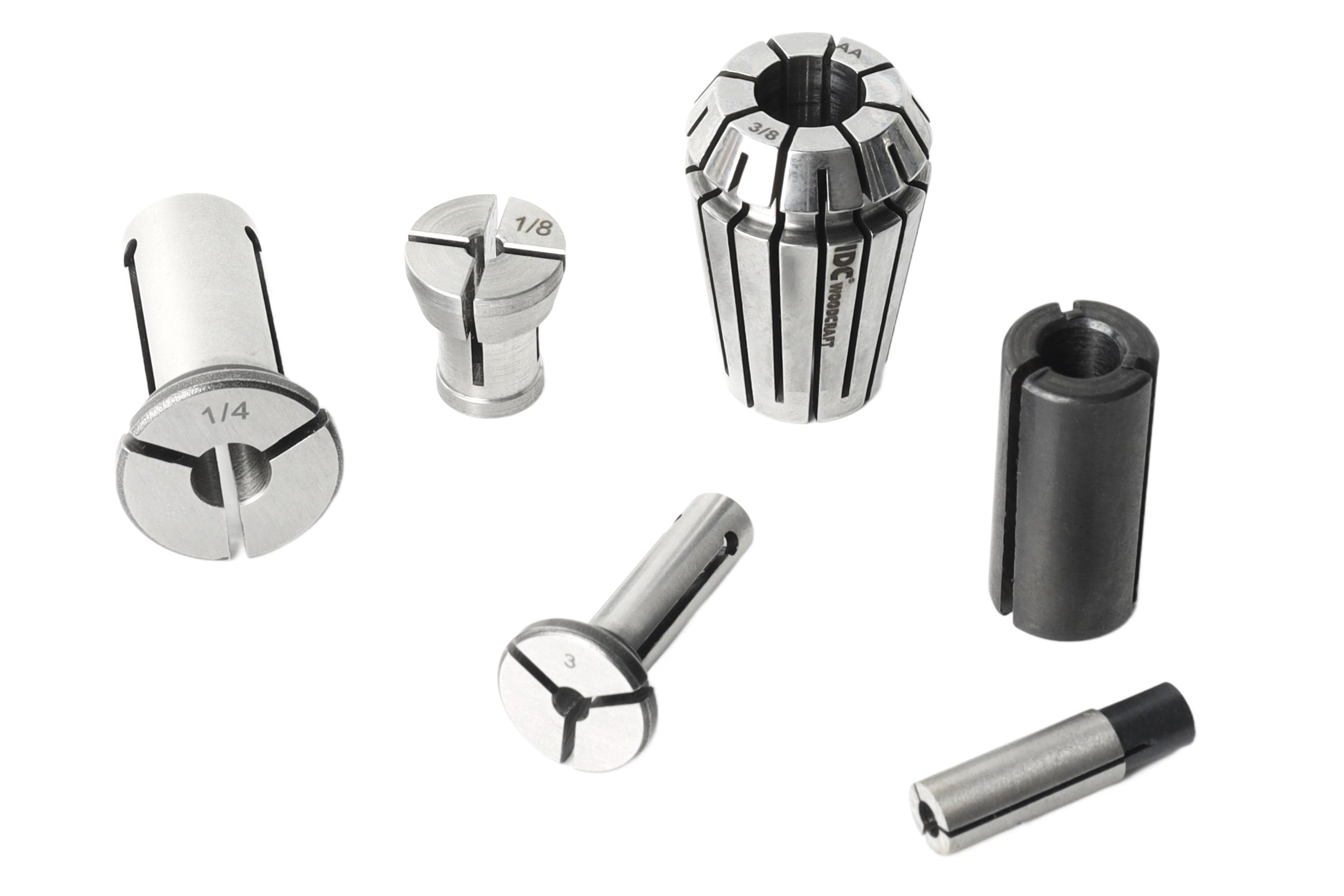
Shank size matters just as much, so check it before you buy. The bit has to fit your collet, usually 1/4 inch or 1/8 inch on hobbyist and prosumer machines. A bit that does not fit is just a paperweight.


Bit Quality and Replacement
 

The last thing to consider is quality over quantity. A sharp edge on a well-ground solid carbide bit cuts cleaner and lasts longer than a drawer full of cheap ones. When a carbide bit finally dulls, replace it instead of trying to sharpen it, since regrinding changes the geometry that made it cut well. For smaller bits with a ¼” or ⅛” shank, it is typically not cost effective to resharpen the bit with a professional bit resharpening company. 


Choosing the Right Bit Every Time

Picking the right CNC bit comes down to a few simple checks. Get the right bit type; make sure it's high quality, and you are ready to begin your project. IDC Woodcraft carries USA-made solid carbide bits and beginner starter sets for every cut in this guide, so you can shop by shape or by project and start carving today. Shop our bit sets, and bits for every project at IDC Woodcraft